The Jobsite Plant Selector
How a hardscape contractor’s crews stopped designing plantings around what the nursery probably had — with live wholesale inventory matched to each jobsite’s conditions.
Catalogs remember. Inventory forgets.
Plant selection ran on spring catalogs and phone calls. The yard’s actual stock — the only truth that matters on buy day — lived in two supplier systems nobody could see.
Wholesale supplier A
Wholesale supplier B
Jobsite conditions
Pick lists
Design first, discover stock later.
A plan built from the catalog met reality at the nursery gate — substitutions on the tailgate, second trips, plants that didn’t fit the site.
Stock first, design against truth.
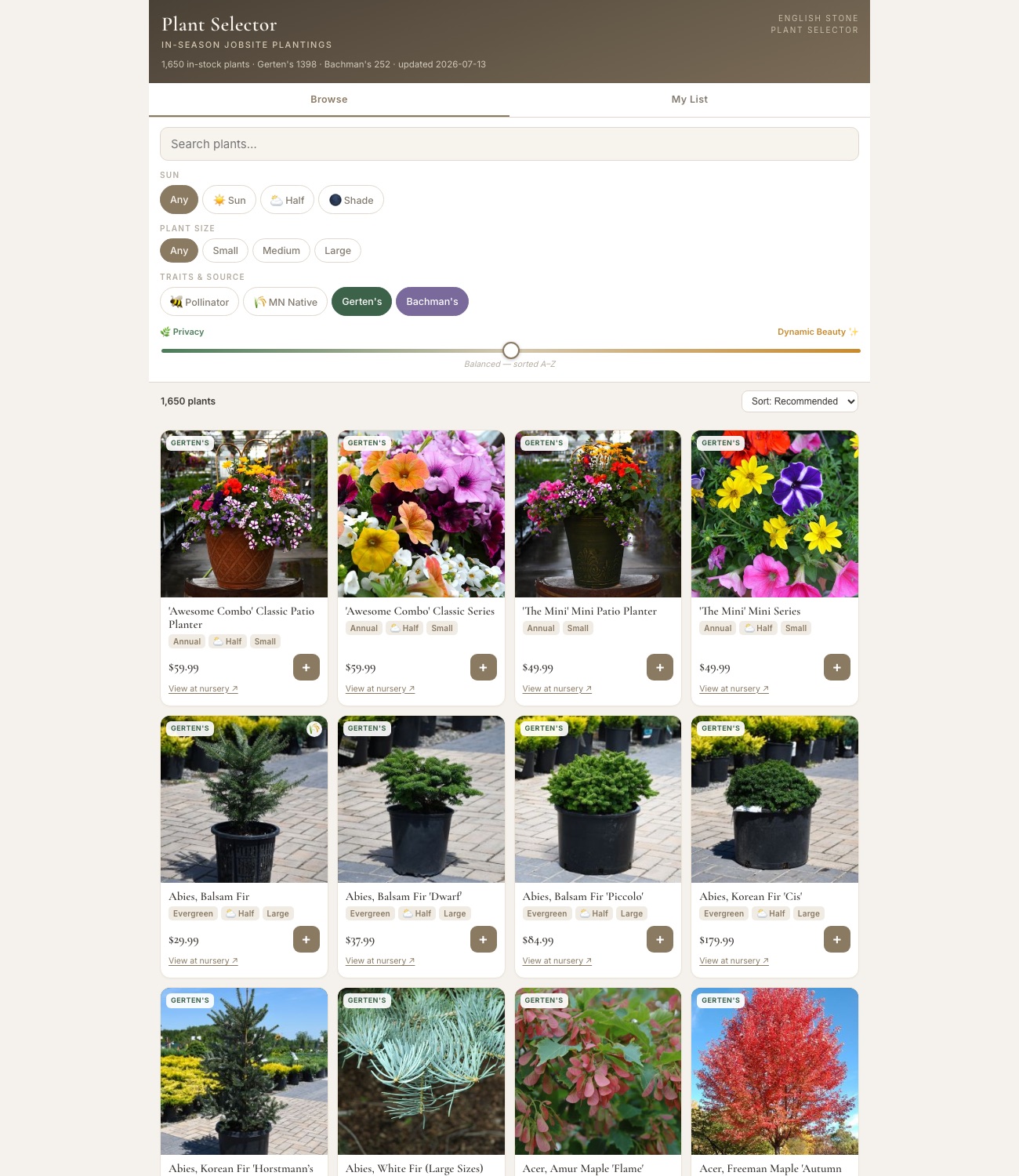
The selector reads what’s actually in two yards today and matches it to the site — the pick list is buyable the moment it’s printed.
Two yards, one answer.
The suppliers run different systems and speak different formats. The selector reads both and presents one truth.
Both wholesalers’ live availability — species, sizes, counts — read directly from their systems. No catalogs, no phone calls.
Each jobsite’s conditions filter the live stock: sun and exposure per bed, mature size against the space, spacing math for coverage.
A crew-ready list with names, quantities, and placement — legible from a tailgate, refreshable before the truck rolls.
From conditions to a buyable list.
The same surface serves the person planning the beds, the crew buying the stock, and the client seeing the plan.
Structure + color: available this week at supplier A
Anchor shrubs and perennial color matched to full sun and the bed’s depth — all lines confirmed in stock.
First-choice shade anchor is out — alternate suggested
The selector surfaced an in-stock alternate with the same mature profile rather than leaving a hole in the plan.
What a refresh actually does.
Every run is a fresh read of two yards, filtered through the site’s conditions.
Read supplier A
Current availability pulled straight from the supplier’s system — species, sizes, counts.
Read supplier B
Second yard read through its own interface; both normalized into one stock picture.
Filter by site
Sun, exposure, and mature-size rules cut the stock list down to what belongs in this yard.
Build the pick list
Spacing math turns beds into counts; the list renders crew-legible.
Stock moves at the yard
A refresh before the buy catches it — the list updates instead of the crew discovering it at the gate.
↻ list re-resolvedSeason turns
Availability shifts wholesale as seasons change; the selector never argues with the calendar — it just reads the yard again.
↻ always-current readsIt ends in a truck, not a slide.
Most case studies end with a testimonial. This one ends with a crew rolling to the nursery with a list that’s already right.
Want live inventory wired into your trade?
One conversation. I’ll find the read, scope the build, and tell you honestly whether it’s a fit.